




.jpg)


Furniture Chair Office: Complete Selection Guide 2026

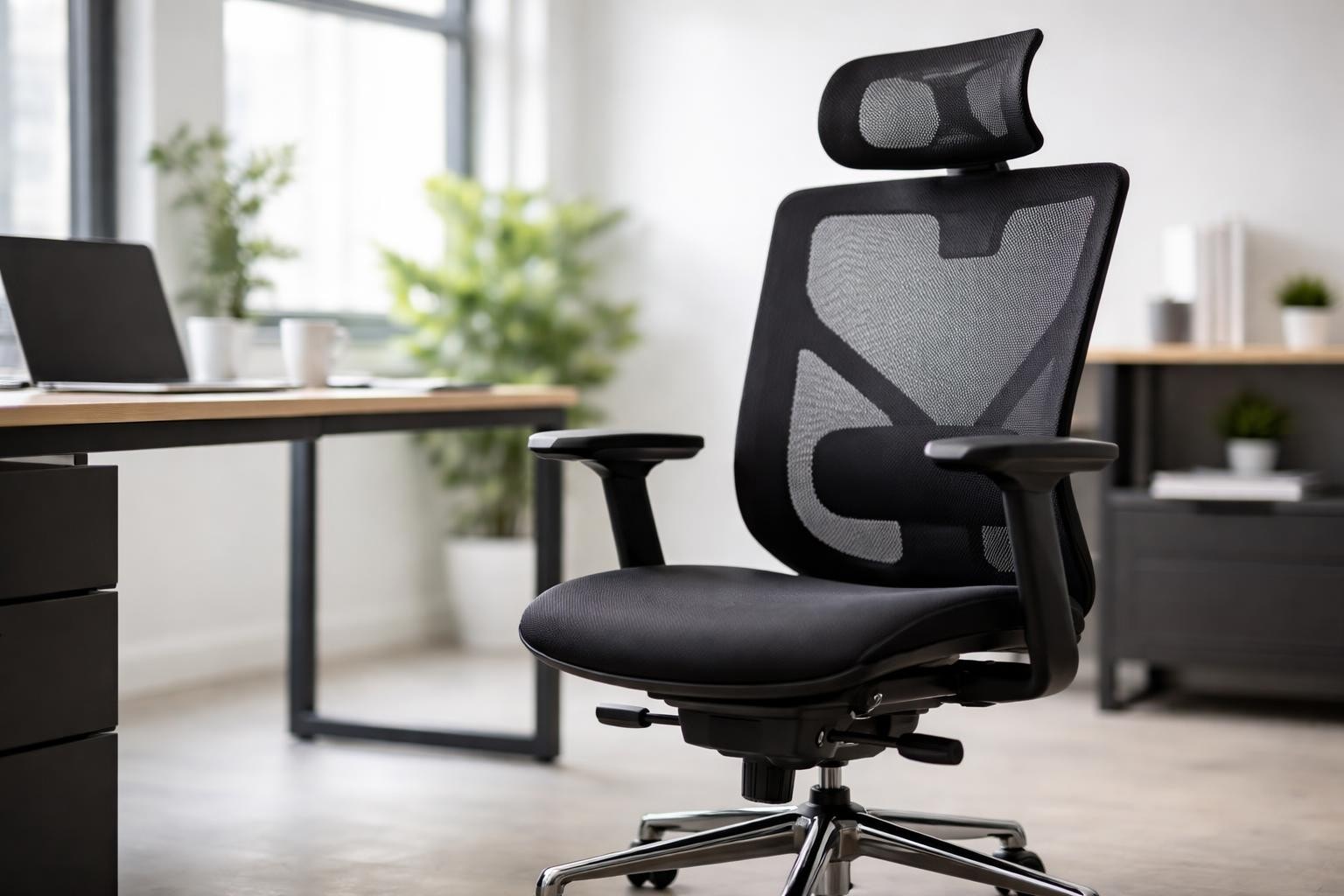
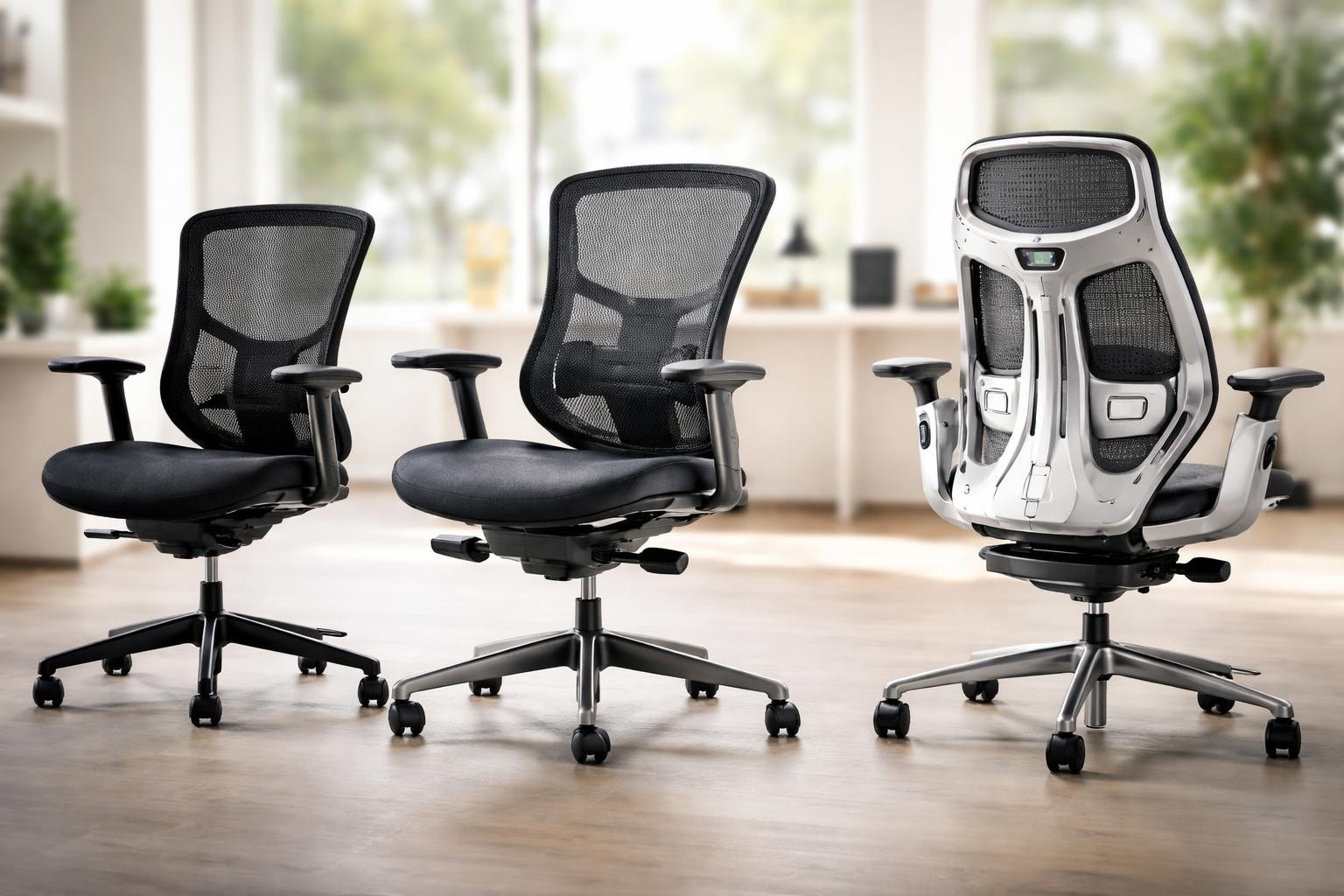
Selecting the right furniture chair office represents one of the most critical decisions for workplace productivity and employee wellbeing. With professionals spending an average of 8-10 hours daily at their desks, the quality and ergonomic design of seating directly impacts health outcomes, work performance, and long-term operational costs. The furniture chair office market has evolved dramatically in recent years, with innovations in materials, adjustability mechanisms, and evidence-based ergonomic principles transforming how businesses approach seating solutions. Understanding the distinctions between basic task chairs and high-performance ergonomic models helps organizations make informed investments that support their workforce while managing budgets effectively.
Understanding Furniture Chair Office Standards and Certifications
The furniture chair office industry operates under strict safety and performance guidelines established by independent testing organizations. Two primary certification systems dominate the North American market: ANSI/BIFMA standards and EN 1335 specifications for European markets.
BIFMA Standards for North American Markets
ANSI/BIFMA standards for office chairs establish comprehensive testing protocols that evaluate durability, stability, and structural integrity. These requirements include:
Load capacity testing to verify chairs support weights up to 250 pounds minimum
Structural stability assessments measuring resistance to tipping and base failure
Cycling tests simulating years of daily use through repetitive load applications
Chemical emissions standards ensuring VOC levels meet indoor air quality requirements
The Business and Institutional Furniture Manufacturers Association updates these standards regularly, with the current X5.1 and X5.11 versions addressing both general office seating and large-occupant chairs. Manufacturers who achieve BIFMA certification demonstrate their products meet rigorous performance benchmarks that predict real-world longevity.
European EN 1335 Compliance
EN 1335 compliant seating provides comprehensive guidance on ergonomic design requirements beyond basic safety testing. This multi-part standard addresses dimensions, mechanical safety, and ergonomic principles specific to office environments.
Part one establishes dimensional requirements ensuring chairs accommodate diverse body types. Part two focuses on mechanical safety, while part three provides guidance on testing methods and ergonomic assessment protocols.
Key Components of Quality Furniture Chair Office Design
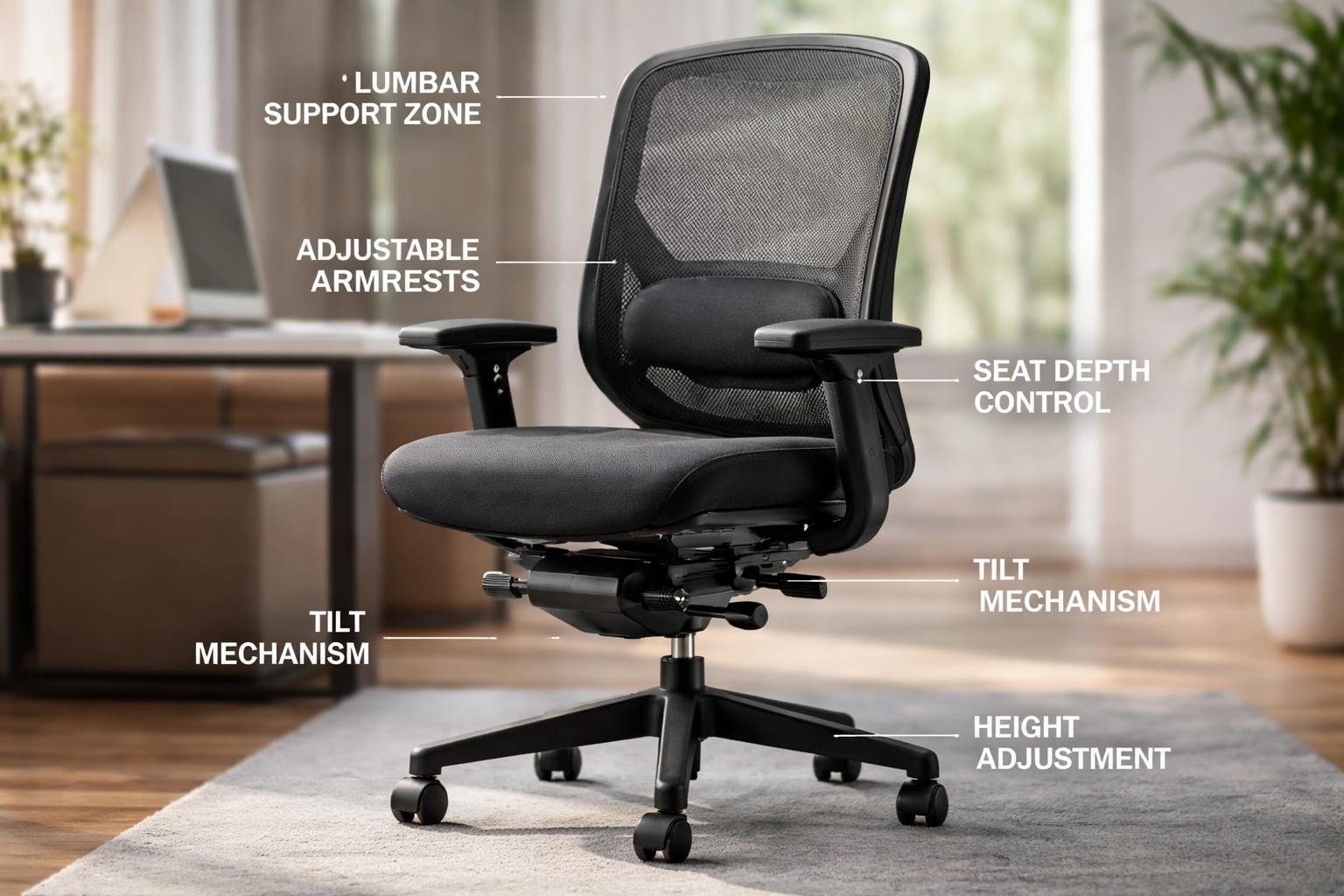
Modern furniture chair office construction incorporates multiple adjustment mechanisms and support systems working in coordination to maintain proper posture throughout the workday.
Lumbar Support Systems
Effective lumbar support represents the foundation of ergonomic seating design. The lower spine's natural curve requires continuous support to prevent muscle strain and disc compression during extended sitting periods.
Dynamic lumbar mechanisms adjust automatically as users shift positions, maintaining contact with the lower back throughout movement cycles. Fixed lumbar support provides consistent positioning at predetermined heights and depths, suitable for dedicated workstations where multiple users don't share chairs.
Research published in Applied Ergonomics demonstrates that proper chair interventions combined with ergonomic training significantly reduce musculoskeletal risk factors among office workers. The study tracked 206 participants over six months, measuring changes in posture awareness and pain reporting.
Seat Pan Adjustability
The seat pan configuration affects circulation, pressure distribution, and spinal alignment. Premium furniture chair office models incorporate waterfall edge designs that reduce pressure on the underside of thighs, promoting healthy blood flow to lower extremities.
Feature | Benefit | Adjustment Range |
Seat depth | Accommodates leg length variations | 2-4 inches forward/back |
Seat height | Aligns knees at 90-degree angles | 16-21 inches from floor |
Tilt tension | Controls recline resistance | Multi-position lock settings |
Tilt angle | Supports dynamic movement | 0-20 degrees backward |
Proper seat height ensures feet rest flat on floors with thighs parallel to ground surfaces. This positioning minimizes pressure on spinal discs while maintaining optimal keyboard and monitor working heights.
Armrest Configuration Options
Armrests serve multiple ergonomic functions when properly designed and positioned. They support forearm weight during keyboard and mouse operations, reducing shoulder and neck muscle tension. However, poorly designed armrests create interference with desk edges or restrict natural movement patterns.
4D armrests adjust in height, width, depth, and pivot angle, providing comprehensive customization for various tasks and user preferences. Fixed armrests offer no adjustment capability and frequently cause positioning conflicts in modern adjustable-height workstation environments.
When evaluating a furniture chair office investment, consider whether armrests retract fully under desks and adjust low enough to allow shoulders to relax in neutral positions during typing activities.
Comparing New and Remanufactured Furniture Chair Office Options
Budget considerations significantly influence furniture chair office procurement decisions, particularly for businesses furnishing multiple workstations simultaneously. Understanding the distinctions between new, refurbished, and remanufactured seating helps organizations maximize value.
New Chair Advantages
New furniture chair office products include full manufacturer warranties, pristine aesthetic appearance, and guaranteed availability of current model specifications. Organizations receive the latest engineering improvements and material innovations when purchasing new inventory.
Premium manufacturers like Humanscale produce chairs with advanced mechanisms requiring minimal adjustments, as demonstrated in this detailed Freedom chair review. The Freedom's self-adjusting recline mechanism eliminates traditional tilt tension controls by automatically calibrating resistance to user weight.
When selecting office desk chairs, new purchases provide peace of mind regarding component condition and expected service life. Most manufacturers warrant mechanisms for 10-12 years and upholstery for 3-5 years under normal use conditions.
Remanufactured Chair Value Proposition
Remanufactured furniture chair office inventory offers substantial cost savings while delivering performance comparable to new products. Professional remanufacturing processes include:
Complete disassembly of chair frames and mechanisms
Replacement of worn components with OEM or equivalent parts
Installation of new upholstery fabrics in current color selections
Thorough cleaning and refinishing of metal and plastic components
Quality control testing verifying all adjustment functions operate properly
Organizations seeking to furnish 20+ workstations simultaneously often realize 40-60% cost reductions by selecting remanufactured furniture chair office solutions. This approach enables businesses to access premium brand quality at mid-range pricing levels.
Ergonomic Assessment and Furniture Chair Office Selection
Identifying appropriate furniture chair office models requires systematic evaluation of user populations, task requirements, and workspace configurations. Generic "ergonomic" labeling lacks regulatory oversight, as explained in this analysis of ergonomic marketing claims, making informed selection more challenging.
Matching Chairs to User Populations
Different departments and job functions benefit from specialized furniture chair office characteristics. Customer service representatives using headsets require chairs with deeper recline ranges supporting phone-based conversation postures. Data entry specialists need firmer seat cushions maintaining stable positioning during rapid keyboard work.
Task-intensive users spending 6+ hours daily at computers require chairs meeting comprehensive ergonomic office seating standards. These positions justify premium investments in fully-adjustable models with advanced lumbar systems and synchronized tilt mechanisms.
Conference and guest seating accommodates shorter duration sitting sessions where comfort matters but extensive adjustability adds unnecessary complexity and cost. These applications suit chairs with fewer mechanical adjustments and more durable upholstery selections.
Trial Testing and User Feedback
Successful furniture chair office implementation includes trial periods allowing employees to experience chairs in actual working conditions before final purchase commitments. Most suppliers provide demonstration units or trial programs spanning 1-2 weeks.
During trial periods, collect structured feedback addressing:
Ease of adjustment for height, tilt, and lumbar positioning
Comfort levels after 2-hour, 4-hour, and full-day sitting sessions
Movement accommodation during reaching, phone use, and collaboration activities
Aesthetic compatibility with existing workspace design elements
Gathering input from actual users prevents costly mismatches between chair capabilities and workforce needs. When searching for an office chair store near me, prioritize suppliers offering extensive testing opportunities and knowledgeable consultation services.
Budget Planning for Furniture Chair Office Investments
Furniture chair office procurement represents significant capital allocation requiring strategic planning and lifecycle cost analysis. Organizations benefit from understanding total cost of ownership rather than focusing solely on initial purchase prices.
Price Range Categories
The furniture chair office market segments into distinct price tiers reflecting feature sets, warranty coverage, and expected service life:
Price Category | Typical Range | Expected Lifespan | Best Application |
Economy | $100-250 | 2-4 years | Light-duty, guest areas |
Mid-Range | $250-600 | 5-8 years | General office, task seating |
Premium | $600-1,200 | 10-15 years | Executive, intensive use |
Ultra-Premium | $1,200+ | 15+ years | Executive, flagship spaces |
Budget allocations should account for warranty periods and replacement cycles. A $400 chair lasting eight years costs $50 annually, while a $200 chair requiring replacement after three years costs $67 annually plus additional procurement labor.
Bulk Purchasing Considerations
Organizations furnishing multiple workstations simultaneously gain negotiating leverage for volume discounts. Most furniture chair office suppliers offer tiered pricing reducing per-unit costs as order quantities increase.
Beyond unit price reductions, bulk purchases provide:
Consistent aesthetics across departments through matching upholstery and finishes
Simplified maintenance with standardized replacement parts inventories
Streamlined training for adjustment features using identical chair models
Reduced shipping costs through consolidated freight deliveries
When planning large-scale deployments, request samples representing the actual production run rather than showroom display models. Manufacturing variations occasionally affect upholstery color matching and component finishing.
Installation and Configuration Services
Professional furniture chair office installation ensures proper assembly, adjustment training, and optimal workspace integration. While many chairs arrive pre-assembled, proper configuration requires expertise most end-users lack.
Professional Assembly Benefits
Certified installers understand manufacturer specifications for torque requirements, component alignment, and quality control verification. Improper assembly creates safety hazards and accelerates premature wear on adjustment mechanisms.
Installation services typically include:
Unboxing and component inspection verifying all parts match packing lists
Mechanism assembly following manufacturer torque specifications
Base and caster installation ensuring proper wheel types for flooring surfaces
Initial adjustment setting height ranges and tilt tensions to mid-points
Debris removal disposing of packaging materials responsibly
Organizations purchasing 10+ chairs simultaneously should require installation as part of furniture chair office procurement packages. The incremental cost prevents assembly errors that void warranties or create injury risks.
Ergonomic Training and Adjustment Guidance
Even the most advanced furniture chair office design provides limited benefit when users don't understand adjustment capabilities. Comprehensive orientation programs teach employees how to:
Set appropriate seat heights based on desk surface levels and monitor positioning
Adjust lumbar support matching individual spine curvature patterns
Configure armrests supporting forearms without elevating shoulders
Use tilt mechanisms promoting movement throughout the workday
Pacific Coast Business & Home Office Furniture provides installation and reconfiguration services ensuring chairs integrate seamlessly with existing workstation layouts. Their experienced teams work throughout California, Nevada, Arizona, Oregon, and Washington, with capabilities extending nationwide for larger projects.
Material Selection and Durability Factors
Furniture chair office longevity depends heavily on upholstery fabrics, cushion foams, and frame construction materials. Understanding these components helps predict maintenance requirements and replacement cycles.
Upholstery Fabric Options
Modern furniture chair office upholstery includes multiple material categories, each offering distinct performance characteristics:
Mesh fabrics provide superior breathability, reducing heat buildup during extended sitting sessions. High-quality mesh maintains tension over time without sagging, though lower-grade versions lose structural integrity within 2-3 years.
Woven textiles offer traditional aesthetics with extensive color and pattern selections. Commercial-grade fabrics rated for 100,000+ double rubs withstand heavy use in multi-shift environments. However, textile upholstery requires more frequent cleaning than alternative materials.
Vinyl and synthetic leather delivers easy maintenance and consistent appearance across large installations. Modern formulations eliminate the stiff, uncomfortable characteristics of earlier vinyl products while maintaining durability advantages.
Genuine leather provides premium aesthetics and exceptional durability when properly maintained. Full-grain leather develops attractive patina over years of use, though higher initial costs limit applications to executive and specialty seating.
Foam Density and Cushion Construction
Seat cushion composition significantly affects comfort and furniture chair office service life. Foam density, measured in pounds per cubic foot, indicates load-bearing capacity and compression resistance.
Premium seating incorporates multi-density foam layering. Firmer base layers (2.5-3.0 lb density) provide structural support preventing bottoming out. Softer top layers (1.8-2.2 lb density) enhance initial comfort while maintaining adequate firmness for prolonged sitting.
Cold-molded foam construction creates seamless cushions without glue seams that separate over time. This manufacturing process produces consistent density throughout cushion depth, extending usable life compared to cut-and-glue assembly methods.
Specialized Furniture Chair Office Applications
Beyond standard task seating, various workplace scenarios require specialized furniture chair office solutions addressing unique functional requirements.
Executive and Conference Seating
Executive furniture chair office models emphasize refined aesthetics, premium materials, and enhanced comfort features. These chairs frequently incorporate:
Polished aluminum bases replacing standard plastic components
Leather or high-grade textile upholstery in sophisticated color palettes
Coordinated guest chairs maintaining design consistency during meetings
Advanced mechanisms operating silently during position changes
Conference room applications require chairs balancing comfort for extended meetings with stacking or nesting capabilities for space efficiency. Look for models with protective floor glides preventing damage during movement and storage.
Specialized Task Chairs
Certain work environments demand furniture chair office designs addressing specific operational needs. Laboratory settings require chairs with non-porous upholstery resisting chemical exposure. Healthcare applications need antimicrobial treatments and easy-clean surfaces supporting infection control protocols.
24/7 operations benefit from heavy-duty mechanisms rated for multi-shift use. These chairs incorporate reinforced frames, commercial-grade cylinders, and extended warranties acknowledging intensive usage patterns.
Manufacturing and industrial office areas may require chairs with static-dissipative properties protecting sensitive electronic components. Conductive materials integrated into upholstery and casters safely discharge static electricity buildup.
When reviewing posture chairs for specialized applications, verify certifications match industry requirements and warranty terms acknowledge intended use conditions.
Maintenance and Lifecycle Management
Proper maintenance extends furniture chair office service life while maintaining hygiene standards and professional appearance. Developing systematic care protocols protects seating investments and ensures consistent performance.
Routine Cleaning Protocols
Regular cleaning prevents soil buildup that degrades upholstery fibers and creates unprofessional appearances. Establish cleaning schedules based on usage intensity:
Daily maintenance: Spot-clean spills immediately using manufacturer-approved products
Weekly care: Vacuum upholstered surfaces removing dust and debris
Monthly deep cleaning: Apply fabric-specific cleaners following manufacturer guidelines
Quarterly inspection: Check mechanism operation and tighten loose fasteners
Different upholstery materials require specialized cleaning approaches. Mesh fabrics tolerate damp cleaning without prolonged drying periods. Leather demands conditioning treatments preventing cracking and maintaining suppleness.
Component Replacement and Refurbishment
Individual furniture chair office components wear at different rates depending on usage patterns and quality levels. Rather than replacing entire chairs, strategic component replacement extends useful life economically.
Commonly replaced elements include:
Casters and wheels showing flat spots or mobility restrictions
Gas cylinders losing height adjustment capability
Armrest pads displaying excessive wear or damage
Upholstery showing permanent staining or fabric degradation
Many premium manufacturers maintain parts inventories supporting chairs discontinued years earlier. When selecting initial furniture chair office purchases, verify replacement part availability for models under consideration.
Pacific Coast Business & Home Office Furniture offers asset liquidation services helping organizations recover value from surplus seating during facility changes or upgrades. Their comprehensive seating inventory includes options for immediate deployment across various budget levels.
Sustainability and Environmental Considerations
Environmental consciousness increasingly influences furniture chair office selection as organizations pursue sustainability goals and corporate responsibility objectives. Multiple factors contribute to seating's environmental footprint throughout product lifecycles.
Manufacturing and Material Sourcing
Responsible manufacturers prioritize recycled content in plastic components, responsibly harvested wood in structural elements, and low-emission adhesives in upholstery assembly. Third-party certifications like GREENGUARD verify products meet strict chemical emissions limits protecting indoor air quality.
The furniture chair office industry has made significant progress reducing environmental impacts:
Recycled aluminum in bases and frames, requiring 95% less energy than virgin material production
Bio-based foams derived from renewable plant materials replacing petroleum-based polyurethane
Water-based adhesives eliminating volatile organic compound emissions during manufacturing
Recyclable packaging using corrugated cardboard rather than non-biodegradable foam protection
Organizations committed to sustainable procurement should request environmental product declarations documenting lifecycle impacts from raw material extraction through end-of-life disposal.
End-of-Life Planning
Furniture chair office disposal creates significant waste streams when chairs reach end-of-service. Forward-thinking organizations implement circular economy principles extending material value beyond single-use scenarios.
Remanufacturing represents the most sustainable option, returning used chairs to like-new condition through component replacement and refinishing. This process prevents functional seating from entering landfills while providing cost-effective inventory for budget-conscious buyers.
Recycling programs disassemble chairs into constituent materials, separating metals, plastics, and textiles for appropriate processing streams. Many components achieve near-complete recyclability when properly sorted, though upholstery combinations present challenges requiring specialized facilities.
Regional Considerations for Furniture Chair Office Selection
Geographic factors influence furniture chair office procurement decisions through delivery logistics, service availability, and regional preference variations. Understanding these dynamics optimizes purchasing outcomes.
West Coast Market Characteristics
California, Nevada, Arizona, Oregon, and Washington represent diverse markets with varying regulatory requirements and business cultures. California's stringent fire safety standards mandate specific upholstery treatments, while other states accept broader material specifications.
Delivery timelines vary significantly across the Western United States due to distance and freight availability. Major metropolitan areas like Los Angeles, San Francisco, Las Vegas, Phoenix, Portland, and Seattle enjoy frequent delivery schedules with 1-2 week lead times. Rural locations may experience 3-4 week delays requiring advance planning.
Local service availability affects post-purchase support for assembly, repairs, and adjustments. Suppliers with regional presence throughout the West Coast provide responsive support compared to distant vendors relying on third-party contractors.
Climate and Environmental Factors
Regional climate conditions impact furniture chair office material selection and performance. Desert environments in Arizona and Nevada create dry conditions accelerating leather drying without proper conditioning. Coastal humidity in Oregon and Washington affects metal components requiring corrosion-resistant finishes.
Temperature extremes in storage and transportation can damage adhesives and upholstery materials. Reputable suppliers warehouse inventory in climate-controlled facilities and specify appropriate freight handling to prevent damage during seasonal temperature variations.
Selecting the appropriate furniture chair office requires balancing ergonomic requirements, budget constraints, aesthetic preferences, and operational needs. By understanding industry standards, evaluating material quality, and considering total lifecycle costs, organizations make informed investments supporting workforce health and productivity. Pacific Coast Business & Home Office Furniture provides comprehensive solutions including new and remanufactured seating, professional installation services, and expert consultation throughout California, Nevada, Arizona, Oregon, and Washington, with nationwide shipping capabilities for businesses requiring quality furniture chair office solutions.
Comments